P✓ / H✓: có dẫn chứng kinh Pāli / tên Hán tạng được đối chiếu. P? / H?: chưa xác minh đủ nguồn, không có nghĩa là nhân vật không tồn tại trong tạng. Gợi ý từ từ điển được giữ riêng, không coi là tên đã duyệt.
Nhân vật cùng tên có thể là những người khác nhau. Hồ sơ nghi trùng, sao chép tiểu sử hoặc sai nhóm thời kỳ được ghi để soát tiếp, chưa gộp hay xóa.
1. Citta (called Cittagahapati).-A householder of Macchikāsanda, where he was Treasurer. He was later declared by the Buddha to be pre-eminent among laymen who preached the Doctrine (A.i.26). On the day of his birth the whole city was covered knee-deep with flowers of various hues, hence his name.
An eminent lay disciple of the Buddha declared foremost among those who gather a following by means of the four bases of sympathy (catūhi vatthūhi parisam sanganhantānam) (A.i.26). He was the son of the, king of Alavī (hence his name Alavaka), and the Buddha saved him from being eaten by the Yakkha Alavaka. He was given the name of Hatthaka because he was handed to the Buddha by the Yakkha, after the latter's conversion, and by the Buddha to the king's messengers. He was thus "handed" from one to another (hatthato hattham gatattā) (AA.i.212; SNA.i.240).
Sūra-Ambaṭṭha.—
Lòng tịnh tín bất động tối thắng
Nam cư sĩ được Phật tán thán là tối thắng về có lòng tịnh tín bất động (aggaṃ aveccappasannānaṃ). Ông phát nguyện được sự tối thắng này từ thời Phật Padumuttara (A. i. 26; cf. iii. 451).
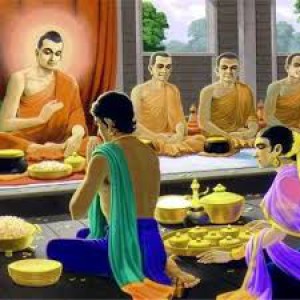
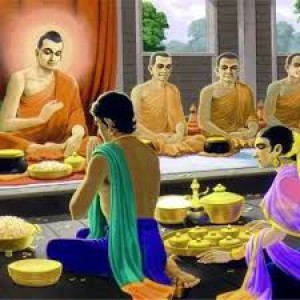
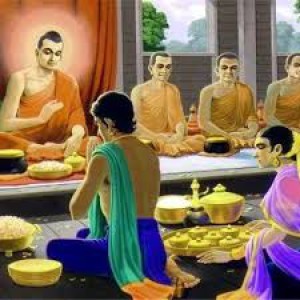
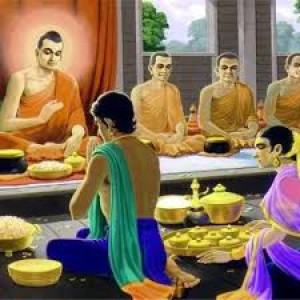
Vào thời Phật hiện tiền, ông sinh làm con của một gia đình chủ ngân khố ở Sāvatthi và đi tu theo ngoại đạo. Một hôm, thấy Sūra đủ duyên lành, Phật đến khất thực ở nhà ông. Ông thỉnh Ngài vào nhà, đặt Ngài ngồi trên một sàng toạ đầy đủ tiện nghi và mời Ngài thọ trai. Lúc Ngài nói lời tuỳ hỷ, ông đắc quả Dự lưu.
Ugga.—
Nam cư sĩ tối thắng về bố thí các món đồ khả ý
Gia chủ ở Vesāli được Phật tán thán là cư sĩ tối thắng vì ông bố thí các món đồ khả ý (manāpadāyakānaṃ, A. i. 26). Chú giải Tương ưng (SA. iii. 26) ghi sai là aggo panītadāyakānaṃ, đó là danh hiệu của ông Mahānāma.
Sāḷha (cháu trai của Migāra ) : Vị này nhiễm ái dục với tỳ kheo ni Sundarīnandā - do duyên gặp gỡ nhiều lần.
1. Sālha, called Migāranattā. He once visited Nandaka Thera with Pekkhuniya's grandson, Rohana. See the Sālha Sutta (A.i.193 f). He built a vihāra for the nuns and Sundarīnandā was appointed to supervise the work. As a result, Sālha and Sundarīnandā saw each other frequently and fell in love. Wishing to seduce her, Sālha invited a party of nuns to his house and set apart seats for those nuns who were older than Nandā in one part, and for those younger in another, so that Nandā would be alone. But she, guessing the reason for the invitation, did not go, and, instead, sent an attendant nun to Sālha's house for her alms, excusing herself on the plea that she was taken ill. Salha, hearing of this, set a servant to look after the other nuns and ran off to the monastery. Nandā, on her bed, was waiting for him, and he seduced her (Vin.iv.211f).
Buddhaghosa explains (Sp.iv.900) that Sālha was called Migāranattā because he was the grandson of Migaramātā, (Visākhā).

 Cận sự nam/nữ