
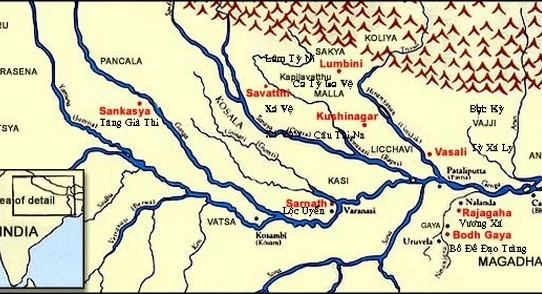
 Vương quốc Kosala
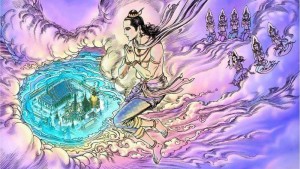 Mốc I : Hoàn cảnh trước khi Phật ra đời
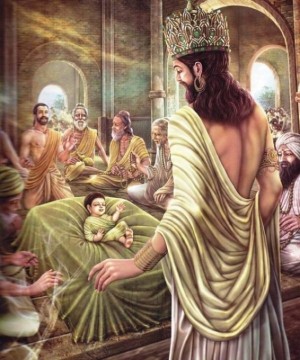 Mốc II : Sự kiện Phật đản sanh
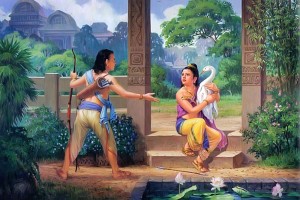 Mốc III: Giai đoạn tuổi thơ của Bồ tát Tất Đạt Đa
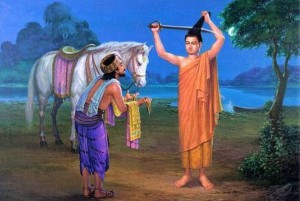 Mốc IV : Giai đoạn trưởng thành - xuất gia
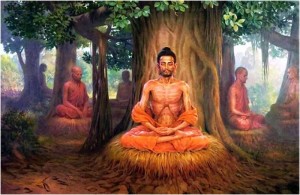 Mốc V : Tầm đạo
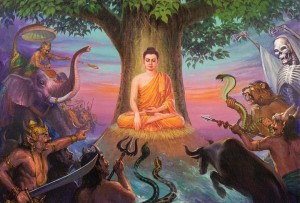 Mốc VI : Thành đạo
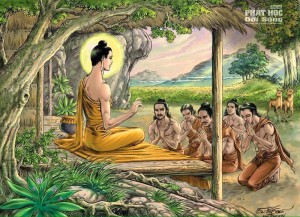 Mốc VII: Những vị đệ tử đầu tiên
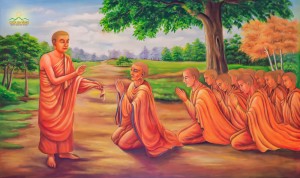 Mốc VIII : Tăng đoàn lớn mạnh
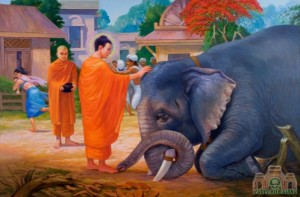 Mốc IX: Mười ba năm cuối cuộc đời Đức Phật
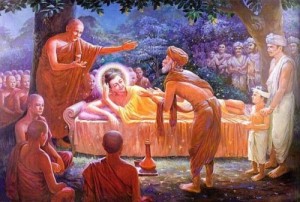 Mốc X : Đức Phật nhập niết bàn

MỤC LỤC NỘI DUNG
Mục lục nhân vật
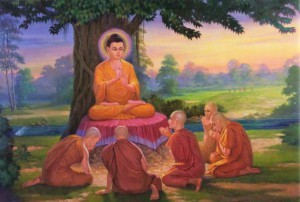
Nhân vật Phật học
Tôn giả Gayākassapa – người em út trong nhóm ba vị đạo sĩ thờ lửa( top 80 trưởng lão nhóm phải)
One of the three Kassapa brothers, the Tebhātika-Jatilā (q.v.). On leaving the world with his brothers and becoming an ascetic, he gathered round him a company of two hundred other ascetics. They all lived at Gayāsīsa, hence his name (Gayāsīse pabbajito ti Gayā Kassapo nāma jāto). When Uruvela-Kassapa was converted, Gayā-Kassapa, with his followers, joined t...
566 lượt xem
#611 mã dữ liệu
Nam giới tính 06.06.2024 ngày khởi tạo 20.09.2026 cập nhật
THÔNG TIN KHÁI QUÁT
Xem kinh liên quan ↓
Dữ liệu nhân vật
- Giới tính
- Nam
- Mã dữ liệu
- #611
- Khởi tạo
- 06/06/2024
- Cập nhật gần nhất
- 18/11/2025 21:04
- Lượt xem
- 566
- Trạng thái nội dung
- Có nội dung chính
Tóm lược
One of the three Kassapa brothers, the Tebhātika-Jatilā (q.v.). On leaving the world with his brothers and becoming an ascetic, he gathered round him a company of two hundred other ascetics. They all lived at Gayāsīsa, hence his name (Gayāsīse pabbajito ti Gayā Kassapo nāma jāto). When Uruvela-Kassapa was converted, Gayā-Kassapa, with his followers, joined the Order, and at the conclusion of the Adittapariyāya Sutta they all became arahants (Vin.i.33f.; AA.i.165). Gayā-Kassapa is reported (Thag.v.345f) to have said that he used to bathe three times a day at Gayātittha, in order to wash away his sins during the festival of Gayāphaggu.
HỒ SƠ Tôn giả Gayākassapa – người em út trong nhóm ba vị đạo sĩ thờ lửa( top 80 trưởng lão nhóm phải)
Tôn giả Gayākassapa – người em út trong nhóm ba vị đạo sĩ thờ lửa( top 80 trưởng lão nhóm phải) Tôn giả Gayākassapa – người em út trong nhóm ba vị đạo sĩ thờ lửa ( 1 trong 3 anh em Ca Diếp) https://www.palikanon.com/english/pali_names/g/gayaa_kassapa.htm One of the three Kassapa brothers, the Tebhātika-Jatilā (q.v.). On leaving the world with his brothers and becoming an ascetic, he gathered round him a company of two hundred other ascetics. They all lived at Gayāsīsa, hence his name (Gayāsīse pabbajito ti Gayā Kassapo nāma jāto). When Uruvela-Kassapa was converted, Gayā-Kassapa, with his followers, joined the Order, and at the conclusion of the Adittapariyāya Sutta they all became arahants (Vin.i.33f.; AA.i.165). Gayā-Kassapa is reported (Thag.v.345f) to have said that he used to bathe three times a day at Gayātittha, in order to wash away his sins during the festival of Gayāphaggu. In the time of Sikhī Buddha he was a householder, and later became a forest-dwelling hermit. One day he saw the Buddha walking alone in the forest and offered him a kola-fruit (ThagA.i.417f). He is evidently identical with Koladāyaka of the Apadāna. Ap.ii.379; see also ii.483. Một trong ba anh em nhà Kassapa, Tebhātika-Jatilā (qv). Khi rời bỏ thế giới với những người anh em của mình và trở thành một nhà khổ hạnh, ông đã tập hợp lại cho mình một đội gồm hai trăm nhà khổ hạnh khác. Tất cả họ đều sống tại Gayāsīsa, do đó có tên của ông (Gayāsīse pabbajito ti Gayā Kassapo nāma jāto). Khi Uruvela-Kassapa được cải đạo, Gayā-Kassapa, cùng với những người theo của mình, gia nhập Dòng, và ở phần kết của Adittapariyāya Sutta, tất cả họ đều trở thành A la hán (Vin.i.33f; AA.i.165). Gayā-Kassapa được báo cáo (Thag.v.345f) cho biết rằng ông đã từng tắm ba lần một ngày tại Gayātittha, để rửa sạch tội lỗi của mình trong lễ hội Gayāphaggu. Vào thời Đức Phật Sikhī, ông là một chủ hộ gia đình, và sau đó trở thành một ẩn sĩ sống trong rừng. Một ngày nọ, ông thấy Đức Phật đi dạo một mình trong rừng và cúng dường cho ông một quả kola (ThagA.i.417f). Rõ ràng là ông ta giống hệt Koladāyaka của Apadāna. Tháng ba năm79; xem thêm ii.483. Reborn in this Buddha-age in a brahmin(priest) clan [his story resembles that of Kassapa of the River, his followers numbered 200, and that he lived at Gaya].[1] He declared aññā(supreme attainment) by exalting the washing away of evil, thus: [345] Pāto majjhantikaɱ sāyaɱ tikkhattuɱ divasassahaɱ,|| [346] Yaɱ mayā pakataɱ pāpaɱ pubbe aññāsu jātisu,|| [347] Sutvā subhāsitaɱ vācaɱ dhammatthasahitaɱ padaɱ,|| [348] Ninhātasabbapāpomhi nimmalo payato suci,|| [349] Ogayhaṭṭhaŋgikaɱ sotaɱ sabbapāpaɱ pavāhayiɱ,|| [345] At morning, at noonday, at the evening [346] In days gone by, those here and now by this [347] I heard a voice that uttered winning words, [348] Now from all evil am I truly bathed, [349] For I have plunged into the Eightfold Stream(path of Buddha), [1] Oddly enough, the Commentary does not mention his relationship to Uruveḷa-Kassapa, nor to Kassapa of the River. See Vinaya Texts, loc. cit [2] The Commentary repeats (cf. above, p. 181) that the annual sacramental festival in the month of Phagguṇa is here referred to, and not the name of the town only, as Dr. Neumann holds. The stanza starting with Pāto majjaṇhikaṃ constitutes that of the venerable thera Gayā-Kassapa. What is the origin? This one also, having done devoted deeds of service toward former Buddhas, accumulating good deeds conducive towards escape from rounds of repeated rebirths (vaṭṭa) in this and that existence, was reborn in a family home, at the time of the Blessed One Sikhi, thirtyone aeons (kappa) ago; on having attained the age of intelligence, he gave up his household life, owing to his keen desire (ajjhasaya) to escape (nissaraṇa) (the rounds of repeated rebirths), renounced the world by becoming a hermit-recluse, had a hermitage built in the forest region, and dwelt there with forest roots and fruits as his nourishment. On that occasion; however, the Blessed One, all alone, without any companion, went near his hermitage. On having seen the Blessed One, he became pious-minded, approached (Him), paid his homage (to Him), stood on one side, looked at the time; and offered delightful jujube fruit to the Master. On account of that act of merit, he wandered about his rounds of repeated rebirths, among divine and human beings, and was reborn in a brahmin family, when tis Buddha arose; on having come of age, he gave up his household life owing to his keen intention (ajjhāsaya) to get out (of the rounds of repeated rebirths), renounced the world by becoming a hermit recluse, and dwelt at Gayā, together with two hundered hermits. Because he dwelt at Gayā and because his clan was Kassapa, he was known as Gayā-Kassapa. Having been given the ordination (upasampadā) with an address, made by the Blessed One as Come, monk! To him, together with his retinue, he became established in Arahantship, on his having been instructed by Buddha’s teaching of the allegory of being burnt (Ādittapariyāyadesanā). Hence, has it been said in the Apadāna:– “Dressed in antelope’s skin (ajīna), I was then the wearer (dhara) of reed raiment (vākacīra); I brought back to my hermitage jujube fruits after having filled my basket (with them). At that juncture, Buddha Sikhī, all alone, was without any companion; having His knowledge pertaining to all occasions, He came near my hermitage. Making my mind pleasingly pious, I paid my homage to the virtuous (Buddha); with my both hands raised, I made my offering of jujube fruits to Buddha. It was thirty two aeons (kappa) ago, that I made my fruit-offering, then; I do not remember any evil existence; this is the fruitful result of jujube offering. My depravity had been burnt. … Buddha’s instruction had been carried out.” Having; however, become established in Arahantship, he reflected upon his own proper performance (paṭipattiṃ) and spoke these five stanzas in order to reveal his Arahantship (aññā) by way of (mukhena) announcing his having washed away (pavāhana) evil (pāpa). 345. “That I descended into the water morning, noon and evening, thrice a day at Gayā on the festive day of the lunar mansion of Uttarapbaguni the month of March (phagguni). 346. “Whatever sinful deed (papa) had been done by me, formerly, in other births, I now wash it away; in this manner, formerly, was my wrong view. 347. “After having heard the well-spoken word, expressions complete with truth (dhamma) advantage and welfare, I wisely reflected upon the meaning, the truth (tathaṃ), according to the truth (yāthāvataṃ). 348. “I am cleansed of all sinful evil, free from impurity, purified and clean; I am pure, the heir of the pure, the bosom son of Buddha. 349. “After having plunged (ogayha) into the stream of the eightfold noble path, I washed off all my sinful evil. I achieved (ajjhagamiṃ) the threefold knowledge (vijjā); Buddha’s instruction had been carried out. There, this is the meaning in brief, now, of the first stanza — Pāto means: at the time of sun-rise; majjhanhikaṃ means: at the time of midday; Sāyaṃ means: at the time of evening; thus, of the day; tikkhattuṃ means: for three times; otariṃ means: I went down into the water; in plunging into the water that I did not get down here or there or now or then; Gayāya means: then, indeed, at the landing place of Gayā well recognised (abhisammata) by the multitude of people as “Pāpapavāhana, the washing off of sinful evil.” Gayaphagguyā means: I was continuously engaged in descending into water, annually, on the festive day of the lunar mansion Uttaraphaggunī of the month of Phagguni known as Gayāphaggu. Now, in order to show that significance (adhippāya) by which he was engaged in plunging into the water, he spoke the stanza starting with “yaṃ mayā.” The meaning of that stanza.– Ahuṃ means: I was, evaṃ diṭṭhi means: one of such a perverted view (evarūpavipariṭadassano), pure means: formerly, previous to my following the instruction of the Master, in that I said to myself thus: “Whatever evil deed had been accumulated by me formerly from now, in other existences, that I pavāhemi (now wash away), remove and cleanse (vikkhalemi), idha (here), at the landing place of Gayā, of this Gayāphaggu by means of this (my) descent into the water. Dhammatthasahitam padam sutvā means: an exegesis (niddesa) without elision of preposition (vibhatti alopena); having heard the word of Buddha, the well self-awakened, the word spoken after having made the way of escape from rounds of repeated rebirths (niyyānika) excellently (suṭṭhi) and definitely (ekantena) connected with truth (dhamma) as well as connected with the meaning (attha) with regard to its beginning (ādi), its middle (majjha) and its end (pariyosānato) which has its share (koṭṭhāsa) accompanied with (sahita) the truth (dhamma) and its meaning (attha); tathaṃ means: which is true because of being true according to the condition of absolute sense, the truth made manifest by Him; Yāthāvakaṃ means: according to the truth, according as fit (yathāraham) in the condition of occurrence (pavatti) recurrence (nivatti) and means (upāya) from the point of view of misconception (byabhicāra) atthaṃ means: such meaning as suffering (dukkha) etc; yoniso means: wisely, by such means (upāya) as by the condition of thorough understanding (pariññeyya); paccavekkhisaṃ means: I befittingly considered (pati avekkhiṃ) thus: “Dukkhaṃ pariññeyyaṃ (suffering is to be all-round understood) samudayo pahatabbo (the origin of suffering should be rejected) nirodho sacchikatabho (cessation of suffering should be visualised) maggo bhāvetabbo (the right path is to be developed).” I saw by means of my eye of knowledge and aptly penetrated (into the fourfold noble truths); thus, is the meaning. Ninhātasabbapāpomhi means: I am one who had cleansed himself of all his sinful evils by means of the water of the noble (ariya) path (magga) but because of the state of having aptly penetrated into the (fourfold) truths in this manner. Nimmalo means: free from impurities because of the state of being devoid of dirt and owing to absence of such impurities as lust (rāga) etc., but consequently. Payato suci suddho means: purified, clean and pure, because of the condition of all-round pure bodily conduct, all round pure verbal conduct and all round pure mental conduct but consequent upon that. Suddhassa dāyādo means: I am the heir as a result of taking upon myself the heritage of transcendental truth of Buddha, the Blessed One who is cleanly pure, being free from all the dirt of depravity (kilesa) along with its propensity (vāsanā). Oraso means: I am the bosom son because of the state of my having been specially born and produced by the exertion (vāyāma) of the bosom (uro), whence originates the knowledge of teaching of that very (buddha); thus, is the interpretation. Again also, he spoke the concluding (osāna) stanza starting with “Ogayha” in order to elucidate but his own condition of bathing (nhātaka) from the point of view of absolute meaning (paramattha). There ogayha means: having plunged and gone into. Aṭṭhaṅgikaṃ sotaṃ means: the stream of the right path (magga) which has become the combination (samodhāna) of such eight paths right view (sammādiṭṭhi) and so on. Sabbapāpaṃ pavāhayiṃ means: I washed away the impurity of sinful evil totally (anavasesaṃ). I became a cleanly bathed one in the absolute sense (paramattha) owing to me having been cleansed by the water of the noble (ariya) path (magga). As a result of but that “Tisso vijjā ajjhagamiṃ, kataṃ Buddhassa sāsanaṃ;” the meaning has but been said. The Commentary on the stanza of the Thera Gayā-Kassapa is complete.I. Giới thiệu chung
II. Trưởng lão tăng kệ – Tiểu bộ kinh Nikaya
(CCIV) Gayà-Kassapa (Thera. 39)
Trong thời đức Phật hiện tại, ngài sanh trong một gia đình Bà-la-môn, câu chuyện ngài giống như câu chuyện của Nadì-Kassapa, chỉ khác ngài chỉ có hai trăm đệ tử và sống ở Gayà, ngài nói lên chánh trí bằng cách tán thán tẩy sạch các điều ác như sau:
344. Buổi sáng, trưa, buổi chiều,
Ba lần trong một ngày,
Ta xuống dòng Gà-yà,
Sông Ga-ya-phay-gu.
345. Các điều ác, ta làm
Trong các đời sống trước,
Nay đây ta rửa sạch,
Xưa ta tin là vậy.
346. Nghe lời nói khéo giảng,
Con đường đủ pháp nghĩa,
Với ý nghĩa chân thật,
Ta như lý quán sát.
347. Ta tắm sạch mọi ác,
Ta không uế, trong sạch.
Ta trong sạch thuần tịnh,
Thừa tự bậc trong sạch,
Ta chính là con trai,
Con chính tông đức Phật.
348. Lặn vào dòng Tám chánh,
Ta gột sạch mọi ác,
Ba minh ta đạt được,
Lời Phật dạy làm xong.III. https://tipitaka.fandom.com/wiki/Thera_5.7:_Kassapa_of_Gaya
Chapter V.
Five Verses204. Kassapa of Gayā
Otariɱ udakaɱ so’haɱ gayāya gayaphagguyā.|| ||
Taɱ dānīdha pavāhemi evaɱdiṭṭhi pure ahuɱ.|| ||
Tathaɱ yāthāvataɱ atthaɱ yoniso paccavekkhisaɱ.|| ||
Suddho suddhassa dāyādo putto buddhassa oraso.|| ||
Tisso vijjā ajjhagamiɱ kataɱ buddhassa sāsanan’ ti.|| ||
Thrice in the day I went to Gayā Down in the water at Gayā’s spring feast,[1] For ‘sins that I have done in other births,
I wash away ‘thus did I once believe.
Of which the burden wedded Path(Dhamma) and Good.
And on their meaning, true and genuine,
I pondered much and reasoned earnestly.
Cleansed from error, pure, immaculate.
In purity heir of the Purified,
His child, even the Buddha’s very son.
And every evil thing I have washed away.
The Threefold Wisdom have I found and won,
And all the Buddha remains us do is done.
5.7 [204] Commentary on the stanza of Gayā-Kassapatthera
Chưa có dữ liệu bản đồ cho nhân vật này.
KINH ĐIỂN Xuất hiện trong Nikaya
Xuất hiện ở nikaya khác ( tiểu bộ kinh )

TẠP A HÀM
Các bài kinh A Hàm có liên hệ với nhân vật
Báo lỗi nội dung
Chọn vấn đề bạn phát hiện. Quản trị viên sẽ nhận báo cáo kèm đúng trang hiện tại.
ĐIỀU HƯỚNG TỪ DATABASE
Mạng liên kết nội dung
Liên kết bên dưới được dựng phía server từ các quan hệ đang có trong cơ sở dữ liệu Nikaya Tâm Học.
16liên kết
Kinh & bài có nhân vật
1 mụcCác bài/Kinh liên kết trực tiếp với nhân vật này.
Địa danh của nhân vật
1 mụcQuan hệ Nhân vật ↔ Địa danh đang có trong database.
Nhóm nhân vật
2 mụcMở danh sách nhân vật cùng nhóm hiện hữu.
Nhân vật thường xuất hiện cùng
12 mụcTính từ bài chung và địa danh chung ở backend.
Trưởng Lão Đại Ca Diếp Maha Kasyapa – Đầu Đà ĐệNhất
→
Đức Mục Kiền Liên Manda Galỳayana – Thần Thông Đệ Nhất
→
Tỳ kheo ni BHADDÀ KÀPILÀNÌ (MỸ HẠNH) người vợ đầy đủ thiện căn trước khi xuất gia của ngài ĐạiCaDiếp
→
Thần Y Jīvaka Komārabhacca ( Kỳ Bà)
→
Bà la môn Vassakāra – viên cận thần của vua A xà thế (Ajātasattu) có công lớn khi đánh bại Vesali
→
Tỳ-khưu-ni Khemā (Trí tuệ đệ nhất)
→
Vua Ajatashatru (A-xà-thế )
→
Hoàng Tử Abhaya (1 người con vua BìnhSa)
→
Vua Bimbisāra (TẦN BÀ SA LA) – vương quốc Ma Kiệt Đà
→
Bà La Môn Bạn Của Trưởng Lão Xá Lợi Phất – phước báo của đảnh lễ thánh tăng
→
ƯU LÂU TẦN LOA CA DIẾP (Uruvilva Kasyapa – Uruvela Kassapa)
→
Tỳ-khưu-ni Dhammadinnā (Thuyết pháp đệ nhất)
→